


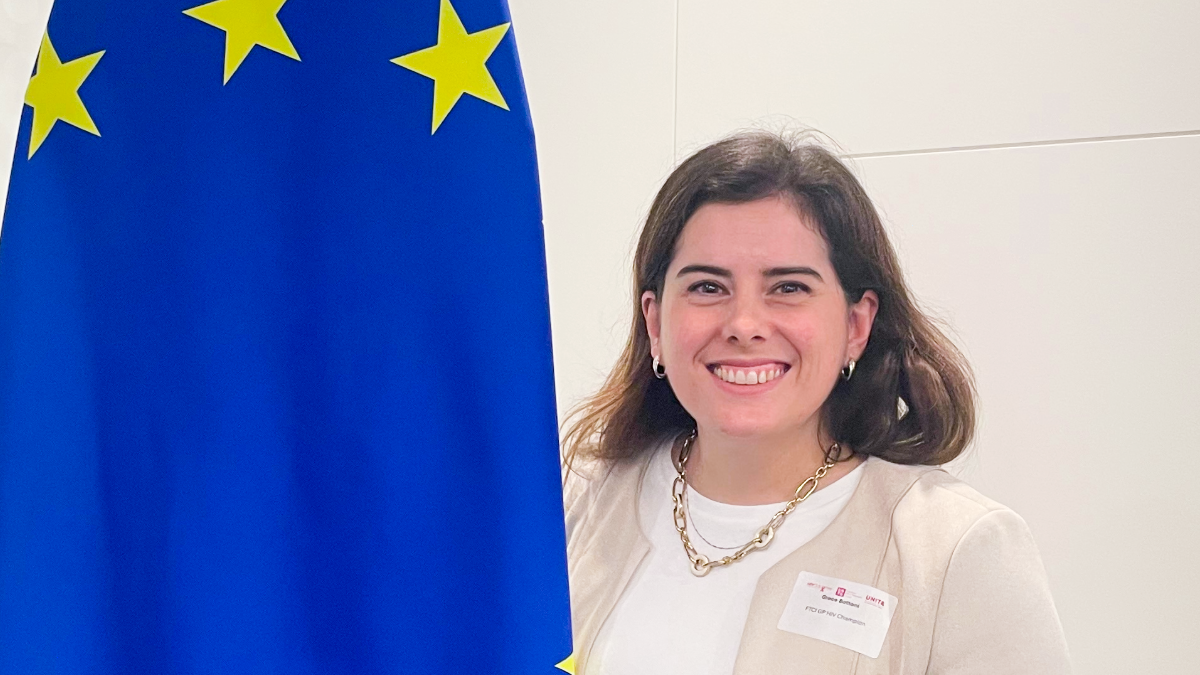
As we begin a new year, we’re pleased to share this reflection from Dr Grace Bottoni, a GP and HIV GP Champion in Lewisham and a Fast-Track Cities London GP Champion. Grace recently attended “EU Leadership at a Crossroads: Ensuring Gender Equity and Lifespan in the HIV Response” at the European Parliament in Brussels. Drawing on her experience working at the frontline of HIV care in London, she reflects on what she heard from people with lived experience, advocates, researchers and political leaders – and what it means for the work ahead.
I had the privilege of attending “EU Leadership at a Crossroads: Ensuring Gender Equity and Lifespan in the HIV Response”, an event focused on how political leadership, policy and partnership can strengthen HIV responses across Europe, particularly for women and across the life course.
It brought together a wide range of voices – including people living with HIV, researchers, advocates, UNAIDS leaders, and Members of the European Parliament. This was a powerful space for learning, reflection and commitment. I left the European Parliament feeling energised and hopeful. Here are five key lessons I’m taking forward:
1 Local action matters and global collaboration is essential
Working in local services, it’s natural to focus on the immediate needs of our own communities – and that work is vital. But this event reminded me that the HIV response does not exist within borders. To truly end new transmissions, we must think locally and act globally, strengthening collaboration across Europe and beyond. We simply cannot do this in isolation.
2 HIV is political – and it must be made mainstream
A recurring theme throughout the day was clear: HIV is political. We cannot end transmissions without political visibility and sustained investment.
To drive meaningful progress, HIV must be part of mainstream policy discussions. This means sustained investment in prevention, political commitment, and integrating HIV care into broader health systems – just like we do for other long-term conditions – rather than treating it as a niche or specialist issue.
3 Gender equity cannot be optional
Women are still being left behind in the HIV response, and their needs cannot be met with a one-size-fits-all approach. Women living with HIV often face intersecting vulnerabilities, and their care, prevention options, and support systems must reflect that reality.
4 Knowledge is power
We often say ‘knowledge is power’, and we usually mean empowering individuals – knowing your HIV status, understanding prevention options, or recognising the importance of U=U. But this applies equally to policymakers and political representatives.
Leaders can only advocate effectively when they understand what is happening on the ground. Researchers, clinicians, advocates, and especially people with lived experience play a vital role in equipping them with real stories, real challenges, and examples of good practice. When we share our knowledge, we empower leaders to stand up for us in their roles and drive meaningful change.
5 Human Rights are central to ending HIV
The event was held on 10 December: Human Rights Day, marking the anniversary of the Universal Declaration of Human Rights. The timing felt striking as human rights violations continue to fuel the HIV epidemic worldwide. Stigma, discrimination and lack of access to services continue to undermine progress. Protecting rights isn’t just ethical – it’s essential for effective prevention and care.
Dr Grace Bottoni is a GP working in Lewisham and the HIV GP Champion the borough. She also contributes to national efforts to eliminate hepatitis C with her role as GP Hepatitis C champion. Her work bridges frontline general practice with public health leadership, with a strong focus on tackling health inequalities through person-centred care.
Her reflections offer timely insight as we look ahead to the year to come, reminding us that while our work is rooted in local communities, progress depends on collaboration, equity and leadership at every level.